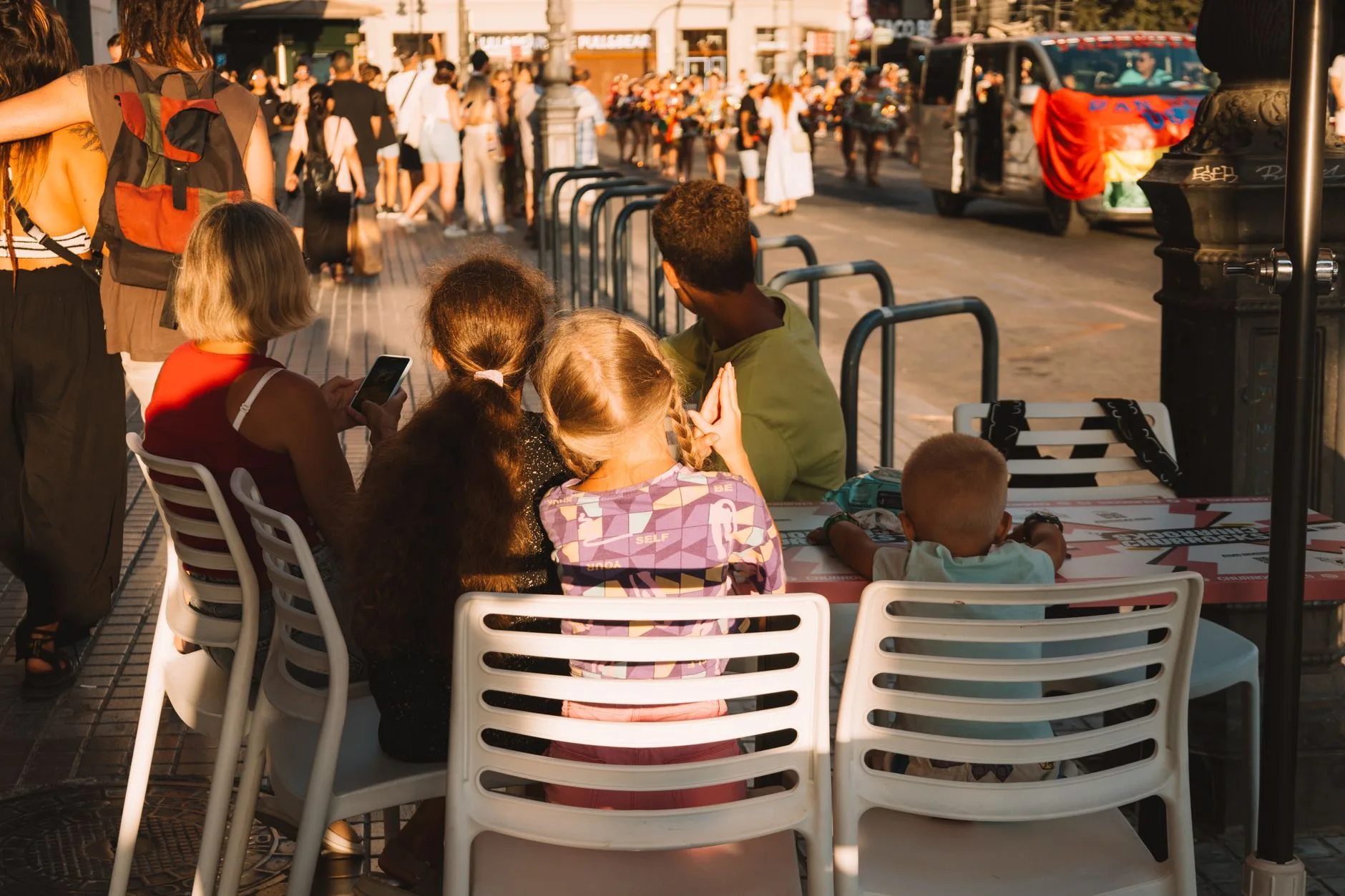
Four clocks on a Sunday with no gate
The King Mango Strut runs through Coconut Grove on Sunday, 3 January 2027. The organiser publishes a 2 p.m. start and a 6 p.m. finish. The street closure begins at 10 a.m. Entertainment on Commodore Plaza follows the parade.
The route turns from Commodore Plaza onto Main Highway, left onto Grand Avenue at CocoWalk and left again into Commodore Plaza.
The event page publishes no end time for the closure and no finish time for the plaza programme. A forecast that needs the hour the neighbourhood reopens has nothing to read.
The crowd figure is the organiser's estimate
The about page puts the crowd at over 10,000 onlookers and the marchers at hundreds of Strutters. Admission is free. The site sells no ticket, publishes no attendance cap and reports no gate count.
Demand for 3 January stays uncounted until the day has happened. Build the forecast on the organiser's estimate and label it as one.
The district record for the month
The Greater Miami Convention and Visitors Bureau republishes the STR monthly report by region. The September 2026 edition carries a Coconut Grove/Key Biscayne line.
Occupancy reads 56.9 per cent for September against 59.4 per cent a year earlier. Year to date reads 65.9 per cent against 72.3 per cent. Room rate reads $267.83 for September against $202.10, and $381.13 year to date against $309.49. RevPAR reads $152.46 for September and $251.10 year to date.
The edition covers September and the region. It carries no January line and no property line. A January forecast can use it as a district anchor and nothing finer.
The parking answer the organiser publishes
The event page names the Municipal Garage at Oak Avenue and Mary Street and calls it ample parking a block away from the route. It lists five further places on the same line: CocoWalk, Mayfair, Coconut Grove Playhouse, St. Stephens Episcopal Church and Coconut Grove Elementary School.
It publishes no rate, no space count and no event-day hours for any of the six. The one parking window the domain does publish belongs to bicycles. Bike Coconut Grove attends bicycles at no charge between noon and 5:30 p.m., staged in the courtyard of St. Stephen's church and reached through the church lot on Main Highway.
The arrival curve the clocks draw
The closure begins at 10 a.m. A car that reaches the Grove after that hour meets a closed route.
The Mutiny Hotel at 2951 South Bayshore Drive publishes check-in at 4:00 PM and check-out before 11:00 AM. The hotel turns rooms from mid-morning, inside the closure window, and hands the next guest the key at 4 p.m., two hours after the banana drop.
The bike valet opens at noon. The parade starts at 2 p.m. and finishes at 6 p.m., when the plaza programme opens.
What an afternoon block can sell
A day-use block priced from noon to 6 p.m. covers the whole parade. Two published facts fix its shape. The closure shuts the route to cars at 10 a.m., so the guest who buys the block arrives on foot or parks before that hour. The plaza programme carries no end time, so a block that closes at 6 p.m. hands the guest back to the street while the crowd stays in the Grove.
The organiser publishes no ticket price, so there is no admission figure to price against. The district rate record and the crowd estimate are the two numbers a revenue committee can carry. The first covers September and the region. The second covers one Sunday. A forecast sheet keeps them in separate cells.
What a forecast sheet can carry
Three figures belong on the sheet, and one label belongs on the first. The organiser's estimate of over 10,000 onlookers is a forecast figure. Name it that in the cell it sits in.
The second figure is 4 p.m., the check-in hour the Mutiny publishes, two hours after the banana drop. The third is the district rate read above, dated to September and named as a regional figure.
Publish the absent facts beside those three. The closure end time. The garage rate and its capacity. The attendance cap. The gate count. A January district rate. List each absent fact as an open line, and a revenue committee reading the sheet sees where the forecast stops.