The corridor carries one day-use card per district
Dayuse.com listed 41 hotels on its San Francisco page on 18 October 2026. One sits in the Embarcadero district: Harbor Court, at 176 dollars before booking fees and 181 dollars at checkout, against a 448 dollar comparative rate on the same card. One sits in Fisherman's Wharf: Hotel Caza, at 100 dollars before booking fees and 107 dollars at checkout, against 350 dollars.
The same read listed Hotel Bijou at 79 dollars, The Mosser at 85 dollars, the Cartwright at 90 dollars, YOTEL at 104 dollars and the Hilton San Francisco Financial District at 109 dollars, each before booking fees, on cards filed under Tenderloin, Yerba Buena, Union Square, Mid-Market and Chinatown.
Two districts on the waterfront, two cards. That is the inventory a shoreline programme reaches first.
The programme has no construction calendar
The Port of San Francisco and the U.S. Army Corps of Engineers published the Recommended Plan for 7.5 miles of shoreline in August 2026 and priced it at 17.8 billion dollars in 2026 dollars. USACE policy precludes advancing the plan for congressional authorization until it or separable elements reach 35 percent design maturity with a validated cost estimate. The plan carries 20 percent design and a conditional cost certification.
Approval and funding sit in a 2026 to about 2030 band. Preconstruction engineering and design follows, then phased construction, with every date marked approximate and subject to change.
Section 2.6 lists what the plan leaves open: detailed designs for flood defenses, designs for waterfront streets and open spaces, the timing and sequencing of construction, and the funding plan. A day-room operator on the corridor has no staging calendar to price into a rate.
Where the work lands first
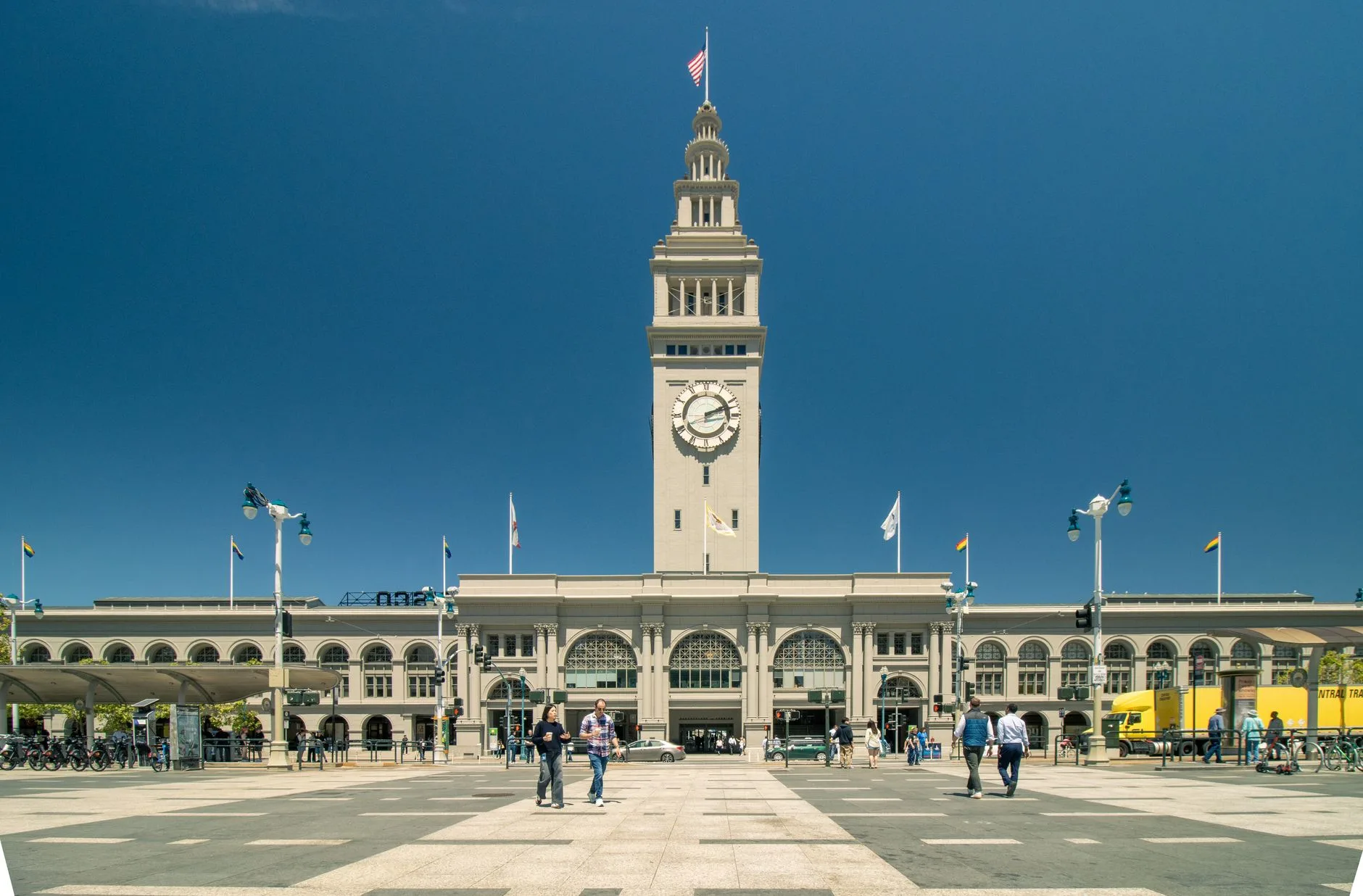
KQED reported in August 2026 that the port concentrated design on Fisherman's Wharf, the Embarcadero between Harrison and Townsend streets, and downtown between Broadway and Harrison streets.
The plan replaces the seawall and wharves along a half-mile stretch of The Embarcadero between Harrison and Townsend Streets, and it describes the South Beach project's structures as earthquake-stable, raised for sea level rise and adaptable to more. At Fisherman's Wharf it takes floodproofing and short floodwalls, and it gives the reason: that approach minimizes disruption from construction, especially to public transit and businesses, until higher flood risks are evident.
What the day desk can hold now
Three terms belong in a corridor day offer.
One: the access window and the checkout time, written into the offer and the confirmation. A day room sells a window, and the card price is the second number a guest reads.
Two: a cancellation term. The plan does not fix the timing and sequencing of construction, so a corridor booking sits against a calendar the port has not published.
Three: a line in the property file naming the stage the plan has reached. The document describes itself as the last technical step before the Chief of Engineers signs and Congress authorizes it, and it lists the funding plan among the things it does not decide.
None of this prices a room. It sets the calendar a corridor day room will trade against, and that calendar sits outside the market.