The Filing and the Two Unit Counts
Permits have been filed for the conversion of 150 Hayes Street in Civic Center to apartments. SF YIMBY reported the filing on 7 August 2026 and put the count at 104, a single-unit reduction from the initial announcement. The Department of Building Inspection holds a separate record for block 0811, lot 022: permit 202610149441, created 14 October 2026, in triage status, describing 106 proposed units. Both counts sit on the public record. The two records do not reconcile, so this article carries both.
Emerald Fund and SDG filed jointly. SDG is a San Francisco investment firm founded by Jack Sylvan, a former senior vice president at Brookfield Properties whose project list includes Pier 70, 5M and Stonestown Galleria.
What the Building Is Today
The permit record describes an office building of six stories, construction type 1, occupancy B, with zero residential units. The proposal adds one story for seven in total. The added floor spans 15,530 square feet. The footprint holds. The structural frame is retained. The below-grade parking garage stays in use. The description states a replacement of the exterior facade. Proposed occupancy is R-2.
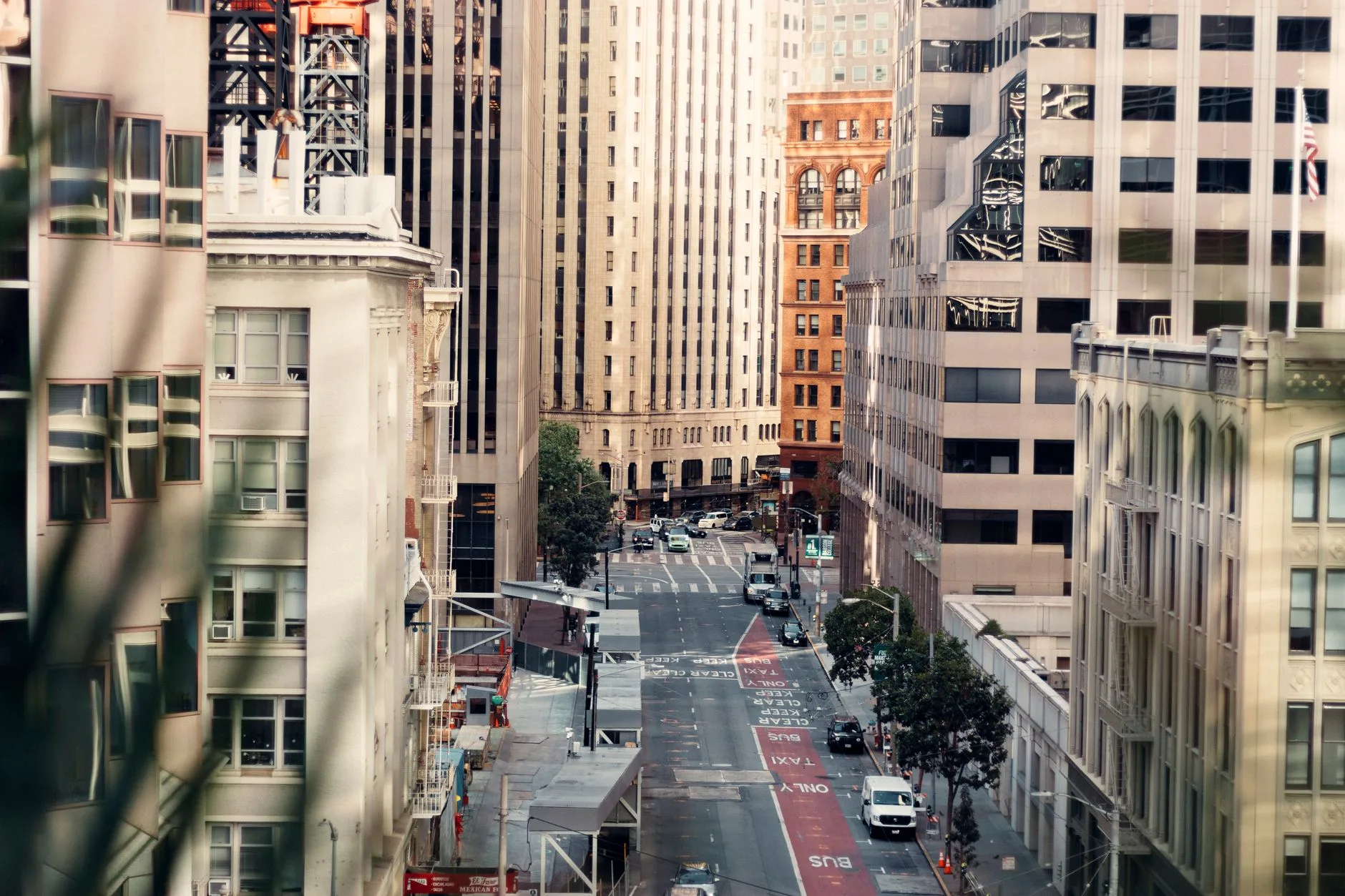
The building dates to 1968 and sits on Hayes Street between Polk Street and Van Ness Avenue. Residents would be one block from City Hall and a couple of blocks from the Civic Center BART Station. Those are the source’s own measures of distance.
The Vacancy Rate the Filing Lands In
City records put the downtown office vacancy rate around 30 percent. That number sets the case for conversion. The same record shows four straight quarters of positive net absorption. The most recent two quarters were the strongest for office net absorption since 2019.
The vacancy rate counts the stock. Positive net absorption counts the space that signed a lease. A building without a tenant sits in the first figure. A building that signed appears in the second.
What the Apartments Add to the Demand Mix
A market-rate residential address places 104 or 106 households inside a district that hotels and venues sell into. The record publishes no on-site food and beverage outlet, no ground-floor commercial space and no hotel component. Any food and beverage trade reaches the Polk Street and Van Ness Avenue frontage.
The shared amenity list belongs to 101 Polk Street. The San Francisco Chronicle reported, by J.K. Dineen, that the new housing will share amenities with 101 Polk, including the existing fitness centre and a new co-working space. A co-working space puts part of the resident base into the district on weekdays.
The Citywide Numbers the Filing Sits Against
San Francisco Travel released its 2026 and 2027 Visitor and Lodging Forecast on 26 August 2026. The 2026 forecast puts hotel occupancy at 70.7 percent, up 5.2 percent year over year. Average daily rate comes to $266.16, up 8.5 percent. Revenue per available room comes to $188.06, up 14.1 percent. The forecast counts 24.4 million visitors and $9.94 billion in visitor spending. Moscone Center carries 38 events in 2026 and more than 656,000 room nights.
A conversion filing leaves those figures where they are. It sets the residential base that the visitor economy draws on for staffing and for late-night trade.
The Conversion Pipeline Beside It
No major office-to-housing conversion is under construction in the city. Forge Development Partners terminated its agreement to convert 785 Market Street, as reported by Sarah Klearman for the San Francisco Business Times. Recent weeks brought filings at 575 Sutter Street, 901 Market Street and 2300 Stockton Street. The record publishes submission status for those three and nothing further: no approval status, no unit count, no schedule.
The Campus That Already Converted
150 Hayes Street was one of four properties around Van Ness Avenue and Hayes Street in the vacated California State Automobile Association campus. The other three are housing today: 101 Polk Street, 150 Van Ness Avenue, and 100 Van Ness Avenue, which the source calls the biggest office-to-housing conversion in the city’s history. Emerald Fund developed all three. The applicant has delivered this change of use on this block before.
What the Filing Leaves Open
No construction start is published. No completion date, contractor, architect, unit sizes, tenure, rent level or interior programme is published either. The permit sits in triage and holds no approvals. A market read rests on the filing date and on the state of the pipeline, and both are current.
The item to track is the count. The two records sit two units apart. The gap closes as the permit moves through review.